Equipment Solutions for Wet & Muddy Property Conditions
2/27/2026
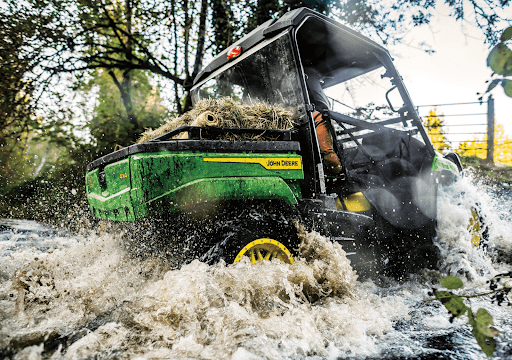
Home to many wetlands and swamp areas, Louisiana’s humid, subtropical climate makes it likely you’ll work in wet conditions. Spring rains, hurricane season remnants, and bottomland flooding are all common occurrences in Louisiana. Equipment without proper traction and durability will bog down, spin out, or get stuck. At Goldman Equipment, we provide John Deere equipment that’s built to withstand slippery conditions.
Tracks tend to perform better on muddy properties than tires, making compact track loaders a great solution for construction work. Compact track loaders distribute weight over a larger surface area, minimizing soil compaction and reducing ground pressure. Plus, their superior traction makes them less likely to get stuck in slippery conditions.
Both the 331G and the 333G are excellent picks for contractors or landowners needing to complete projects in wet conditions. With 91 hp and a 3,100 lbs operating capacity, the 331G offers enough durability and power for property maintenance, moving materials, and site preparation. The 333G provides a power boost of 100 hp and a higher operating capacity of 3,700 lbs for heavier wet soil work. This is ideal for larger property projects.
Much property maintenance and agricultural tasks rely on tractors to get the job done. Luckily, just because they have tires doesn’t mean they can’t get you through the mud. Look for these features in your tractor model for reliable traction, durability, and stability in the toughest conditions.
When choosing your tractor, your drivetrain can make all the difference when operating on difficult terrain. Standard 4WD is always the best choice for unstable grounds, dramatically improving traction compared to 2WD models. With 4WD, the tractor delivers power to all four wheels simultaneously, so if the rear wheels start to slip, front wheels are still pulling. This reduces the chance of wheel spin that creates ruts and soil compaction.
It’s important to note that 4WD still isn’t enough. When operating your tractor, weight balance is key to gaining actual traction. Underballasted tractors spin wheels even with 4WD engaged and overballasted tractors sink deeper into soft ground. A properly ballasted tractor gives you greater stability without excessive ground pressure.
John Deere 3 Series and 4 Series offer 4WD configurations ideal for mid-sized properties working in challenging conditions.
The tires you choose for your equipment make all the difference in the level of stability and performance you’ll have on challenging terrain. The best option for you can vary depending on field conditions and turf.
It’s also important to note that tire width can affect flotation and ground pressure, so choosing the right size for your tractor is critical. Also, proper inflation is key — a lower tire pressure creates more flotation and less ground pressure.
For enhanced traction in extreme conditions, consider adding tire chains and other accessories to support your tractor. Wrapping steel links around your tractor tire gives it a better grip on unstable grounds covered in ice, mud, or steep slopes, while also aiding in steering and braking.
There are a variety of tire chains available for John Deere equipment. John Deere tire chains feature a two-link side chain configuration with double-spaced cross chains. This design, which places one cross chain every two side chain links, ensures a smoother ride and superior traction compared to standard four-link designs.
----
While tractors handle heavy-duty work, there’s another John Deere solution for lighter tasks in wet conditions-
General property maintenance or grounds keeping doesn’t always require a full-sized tractor to get the job done. When you need to access wet areas without leaving deep ruts or need move light loads across saturated pastures, John Deere Gator utility vehicles offer the mobility you need with significantly less ground pressure than trucks or tractors.
Gator utility vehicles distribute their weight over a larger footprint relative to their size, resulting in lower pounds per square inch (PSI) on the ground. A Gator typically exerts 10-20 PSI, depending on the model and load, much less than your typical pickup truck or ag equipment.
This lower ground pressure means Gators can navigate wet pastures, muddy field edges, and saturated trails without destroying the surface. For producers, landowners, or anyone needing to access remote areas when conditions are less than ideal, this capability is invaluable.
John Deere's Crossover Gators provide performance while maintaining excellent wet-condition capability. The XUV models feature powerful engines (up to 50+ horsepower on larger models), standard 4WD, and automotive-style features like power steering and hydraulic disc brakes. The extra power matters when pulling heavy loads through mud or climbing saturated hillsides.
Models like the XUV835M and XUV865M offer cargo bed capacities of up to 1,000 pounds and towing capacities up to 4,000 pounds. Also, the sealed cab option provides weather protection during Louisiana's frequent rain events.
Working in wet and muddy conditions isn't just about having the right equipment- it's about knowing which features matter most for your specific property and operations. Our team at Goldman Equipment understands Louisiana's challenging soil and weather conditions, and we can help you select tractors, attachments, and tire configurations that will keep you productive when others are stuck. Stop by any of our Goldman locations to discuss your property's unique challenges, or give us a call to schedule an on-site consultation.